
On Friday, October 23, one share of the iShares MSCI Brazil ETF, the most popular way for foreigners to buy Brazilian stocks, cost about $42.59. By Thursday’s close it was worth $33.14. Over the same days, the Ibovespa fell 17.5% in reais. The extra loss carried by the foreign investor has a name: currency risk. And this week showed why, in Brazil, it tends to hit at the worst possible moment.
This is the fifth and final article in our series on the market after Brazil’s 2026 presidential election, and the first in our English section. Over the past week, in Portuguese, we have explained how the shock reached local investors: the circuit breaker that halted trading, the mark-to-market losses in Tesouro Direto bonds, and the pass-through of a stronger dollar into consumer prices. To close the series, this piece looks at the other side of the trade: the investor who measures returns in dollars.
The concept: two risks in one ticket
A foreign investor who buys Brazilian stocks is making two bets at once. The first is on the stocks themselves, priced in reais. The second is on the real, because at some point those reais have to be converted back into dollars. If the stocks rise but the real weakens, part of the gain disappears in the conversion. If both fall, the losses pile on top of each other.
The two bets don’t add up neatly, and that is the key point. If stocks and the currency moved independently, a bad week for one could be offset by a good week for the other. In Brazil, they tend to move together. When investors grow nervous about the country, they sell Brazilian stocks and Brazilian reais at the same time, for the same reason.
In our article on correlation (in Portuguese), we found a correlation of −0.68 between the Ibovespa and the dollar from 2016 to 2025: when the stock index falls, the dollar usually rises against the real. For a Brazilian investor, that makes the dollar a natural hedge, cushioning losses in the stock market. For a foreign investor, the same relationship works in reverse. The currency amplifies the equity loss instead of absorbing it. Same correlation, opposite effect, depending only on the currency in which you count your money.
In practice: the same week, three results
Take the five trading sessions from the close of Friday, October 23, to the close of Thursday, October 29. Over that period, the Ibovespa lost 17.5% and the dollar gained 7.9% against the real.
| Investor | Measured in | Return, Oct 23 → Oct 29 |
|---|---|---|
| Brazilian holding the Ibovespa | Reais | −17.5% |
| Foreigner holding the Ibovespa, without currency protection | Dollars | −23.5% |
| Foreigner holding EWZ | Dollars | −22.2% |
To see where the extra loss comes from, follow $10,000. On October 23, with the dollar at about R$4.99, it converts into roughly R$49,900. The Ibovespa falls 17.5%, leaving R$41,200. Converting back at Thursday’s rate of R$5.39 returns about $7,650, a loss of 23.5%.
Notice that the losses don’t simply add up. A 17.5% drop in stocks plus a 7.9% rise in the dollar doesn’t make 25.4%. The currency loss applies to an amount that has already shrunk, so the combined effect is slightly smaller: 23.5%.
The ETF tells nearly the same story. EWZ closed at $42.59 on October 23 and at $33.14 on October 29, so $10,000 invested on Friday was worth about $7,780 a week later. The small gap relative to our Ibovespa calculation comes from composition: EWZ tracks the MSCI Brazil 25/50 Index, which covers large and mid-sized Brazilian companies, not the Ibovespa itself, and it also carries fees and slightly different closing times.
Market application: foreign flows as a thermometer
Why do stocks and the real fall together? The answer lies in the risk premium, the extra return an investor demands for holding a riskier asset. When the perceived risk of a country rises, every Brazilian asset has to become cheaper until its expected return compensates for that risk again. Stocks fall, the currency weakens and interest rates rise at the same time. For the foreigner, all three channels hit the same portfolio.
The clearest gauge of that premium is the credit default swap, a contract that works as insurance against a government default. Brazil’s 5-year CDS rose from 120.2 points on Friday, October 23, to 143.9 points on Monday, its highest level since March 2026. In plain terms, protecting against a Brazilian default became about 20% more expensive overnight.
The second gauge is the money itself. Foreign investors pulled R$2.85 billion out of Brazil’s stock exchange on Monday, the third-largest daily outflow of 2026, according to B3 data. Two details in the numbers matter more than the headline. First, the exit started before the vote: foreigners had already sold a net R$1.03 billion on Thursday, October 22, and R$2.94 billion on Friday the 23rd. Second, many foreigners chose to protect themselves rather than leave. On Monday they bought a net $6.84 billion in dollar derivatives, the largest daily buying since at least July 2022. Buying dollars in the futures market is a way of hedging currency risk, but it also adds pressure on the real, which feeds the very move investors were trying to protect against.
It would be wrong, though, to blame the crash on foreigners alone. The flow data show that Monday’s fall was not driven only by foreign investors. Local funds and individuals sold too, which is what you would expect when a shock changes the outlook for everyone at once.
Case study: the October election trade
The scale of the fall makes sense only in light of what came before it. Over three weeks, foreign investors built one of the most crowded bets of the year: that Brazil was about to elect a more market-friendly government.
| Date | What happened |
|---|---|
| Oct 4 | First round: Flávio Bolsonaro finishes ahead of Lula |
| Oct 5 | EWZ jumps 12.5%, the real strengthens more than 4% |
| Oct 6–16 | Money pours into EWZ ahead of the runoff |
| Oct 22–23 | Foreigners start selling Brazilian stocks |
| Oct 25 | Runoff: Lula is reelected |
| Oct 26 | EWZ falls 19.8%, the Ibovespa 13.88% |
The first round set the trade in motion. Flávio Bolsonaro led with 47.03% of the vote against Lula’s 45.16%. The next day, the dollar fell 4.12% against the real and EWZ closed 12.54% higher at $42.98, because a dollar-priced fund captures the stock rally and the currency gain in the same session. Inside Brazil, foreign inflows on October 5 alone reached R$10 billion, more than in the whole of September.
Then the bet grew. EWZ drew $1.66 billion in the week ending October 16 alone, and election-related positioning added up to about $4.09 billion of inflows before the result. Some investors leveraged the trade further with options, buying calls that would pay off if Brazilian stocks kept rising.
The reversal took a single session. On October 26, the Ibovespa fell 13.88% and EWZ closed down 19.8% at $34.15. In less than three weeks, foreign investors went from celebrating the fund’s biggest gain since March 2020 to suffering its largest loss over the same period.
The lesson is not about who won the election. It is about how an outcome that many investors treated as near-certain was, in fact, close to a coin toss. When everyone positions for the same result, there is nobody left to buy if the result goes the other way, and prices have to fall much further to find a buyer.
Risks and limitations
The first limitation is measurement. Our calculation uses daily closing prices for the Ibovespa and the dollar, which are not set at exactly the same moment as EWZ’s close in New York. Over a calm week the difference is negligible. In a week like this one, it can shift results by a few tenths of a percentage point.
The second is currency protection. An investor who hedged the real would have lost something close to the Ibovespa’s 17.5%, not 23.5%. But hedging has a cost. Because Brazilian interest rates are far above US rates, protecting against a weaker real eats into returns every month, which is why many foreign investors stay unhedged and accept the risk.
The third is statistical. One widely circulated analysis claimed that, under a normal distribution, a move the size of EWZ’s October 26 fall should happen once in 58 quadrillion trading days. The number says more about the model than about the market. As we discussed in our article on volatility (in Portuguese), financial returns have fat tails: extreme days are far more common than a bell curve suggests, especially around binary events like elections.
The fourth is perspective. One week of outflows is not a trend. Even after Monday, the foreign balance at B3 remained positive by R$13.34 billion in October and R$40.73 billion for the year, as of October 26. History also offers a counterpoint: after Lula’s 2022 victory, Brazil’s CDS stood at 278 points on election day and had fallen to 254 by November 18, 2022, as the economic agenda became clearer. Whether that repeats depends on decisions that have not been made yet.
Current context
The pressure continued through the week. On Thursday, the Ibovespa fell 1.06% to 169,186 points, its fourth straight decline, and the dollar rose 0.89% to R$5.39, as investors weighed doubts about the fiscal policy of Lula’s next term and a sell-off on Wall Street. The dollar trimmed its gains late in the session after a CBN radio report that Lula may invite Piauí governor Rafael Fonteles to head the Finance Ministry.
Abroad, the Federal Reserve held US interest rates in the 3.75% to 4.00% range on Wednesday. At home, the fiscal numbers remain at the center of the debate: Brazil’s federal public debt rose 0.97% in September to R$9.4 trillion, under pressure from interest costs.
Today, Friday, October 30, the IBGE publishes its unemployment survey for the quarter ending in September, and the Central Bank releases its fiscal statistics. In the quarter through August, unemployment stood at 5.3%, the lowest for that period since the series began in 2012. Next week, the main event is the Central Bank’s Copom meeting on November 4, where markets are already pricing a rate hike.
Conclusion
Investing in another country means owning two assets at once: the company and the currency. Most of the time that double exposure is a footnote. In Brazil, where stocks and the real tend to fall together when confidence breaks, it becomes the main story.
The week after the 2026 election showed both sides of that mechanism. A Brazilian investor lost 17.5% in reais. A foreign investor holding the same stocks lost about 23% in dollars, not because the companies were worse, but because the currency moved against them at the same moment. Add a crowded bet on a single political outcome, and a correlation that protects locals turned into an amplifier for everyone else.
For readers outside Brazil, the takeaway is simple: before asking how Brazilian stocks will perform, ask what will happen to the real. The answer to the second question often decides the first.
Glossary
| Term | Definition |
|---|---|
| ETF | Exchange-traded fund: a fund that trades on a stock exchange like a single share and tracks an index. |
| EWZ | The iShares MSCI Brazil ETF, listed in New York, the most traded vehicle for foreign exposure to Brazilian stocks. |
| Currency risk | The risk that changes in exchange rates reduce the value of an investment when converted back to the investor’s home currency. |
| Hedge | A position taken to offset a specific risk, such as buying dollar futures to protect against a weaker real. |
| Risk premium | The extra return investors demand for holding a riskier asset. |
| CDS (credit default swap) | A contract that pays out if a borrower defaults; its price is widely used as a measure of country risk. |
| Net flows | The difference between purchases and sales by a group of investors over a period. |
| Crowded trade | A position held by so many investors that an unexpected event forces many of them to exit at the same time. |
| Fat tails | The tendency of financial returns to produce extreme moves more often than a normal distribution predicts. |
What’s next
- Copom preview (November 2, in Portuguese): how to read in the yield curve what the market expects from the Central Bank on November 4.
- Country risk and CDS, explained: what the “insurance price” of a country measures, and why it moves before everything else.
- Hedged or unhedged? How currency-protected ETFs work, and what the protection costs when interest rates differ widely between countries.
References
- InfoMoney. Estrangeiros retiraram R$ 2,8 bilhões da B3 no dia seguinte às eleições (October 28, 2026).
- Eu Quero Investir. Estrangeiros tiram R$ 2,85 bi da B3 após reeleição de Lula (October 2026).
- Poder360. Risco país sobe ao maior nível desde março de 2026 (October 26, 2026).
- Campo Grande News. Dólar sobe a R$ 5,39 em meio à pressão sobre o mercado financeiro (October 29, 2026).
- Diário do Sudoeste. Ibovespa cai pela 4ª vez seguida e dólar fecha a R$ 5,38 (October 29, 2026).
- Money Times. Tempo real: Ibovespa cai 1% com mau humor externo e incertezas sobre ‘Lula 4’ (October 29, 2026).
- VT Markets. iShares MSCI Brazil ETF (EWZ): Price, Holdings and Outlook (October 2026).
- Investing.com. EWZ historical data.
- AOL/Moneywise. Brazil ETF took in $4.09B in 3 weeks as a bet on one candidate (October 2026).
- EBC Financial Group. Brazil Markets Surge After Election: Why the Real, Ibovespa and EWZ All Jumped (October 2026).
- Financial News. EWZ Stock Just Had a One-in-58-Quadrillion Crash (October 2026).
- CNN Brasil. PoderData: Flávio sobe nove pontos em expectativa de vitória (October 11, 2026).
- Poder360. Risco Brasil cai, mas apresenta instabilidade desde vitória de Lula (November 2022).
- CNN Brasil. Desemprego fica em 5,3% no trimestre até agosto, menor nível para o período (September 29, 2026).
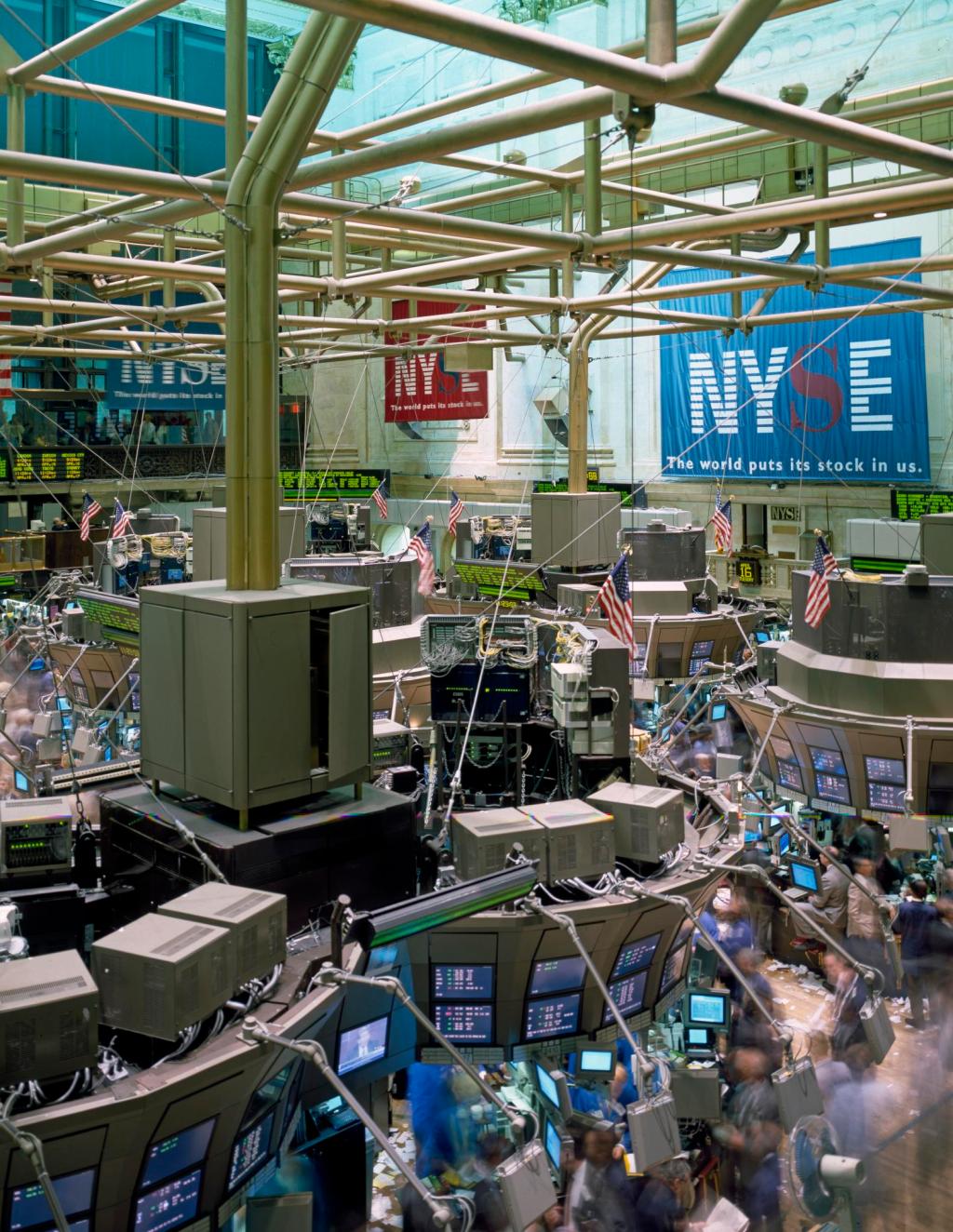
Cover image: the New York Stock Exchange on Wall Street, where EWZ and other Brazil-focused funds are traded by foreign investors. Photo: Carol M. Highsmith / Library of Congress (public domain), via Wikimedia Commons.

